




 Leave a Comment on The Future of Data and Business Analysis Roles in 2026: Where to Focus Now
The Future of Data and Business Analysis Roles in 2026: Where to Focus Now
The job description has changed. Not slightly, but structurally. Roles that once asked for process documentation and pivot tables now list SQL, stakeholder dashboards, AI tool familiarity, and domain expertise in the same breath. If you are a working professional looking to move into or up within Data or Business Analysis, 2026 is not the year to learn what you already know better. It is the year to learn what the market has already decided it needs next.
TL; DR — What This Blog Covers
- Why DA and BA roles are more valuable than ever but different from what they were
- The forces reshaping both roles in 2026
- Which domains and sectors are driving the most hiring
- Where to focus your skill-building right now
- How to position yourself ahead of the competition
What Data Analyst and Business Analyst Jobs Actually Look Like in 2026
A few years ago, a Business Analyst was primarily a requirements gatherer. A Data Analyst was a report builder. Both roles were valuable but fairly contained.
In 2026, that containment is gone. Business Analysts are now expected to be strategic partners who sit at the intersection of data, technology, and business outcomes. Data Analysts are expected to do more than pull numbers they are expected to translate findings into decisions, often working alongside AI tools rather than around them.
The core shift: both roles now require a blend of technical fluency, domain knowledge, and communication capability. Not one of those. All three.
What Is Actually Driving the Change
Three converging forces are reshaping what these roles look like in practice.
1. AI Is a Colleague Now, not a Buzzword
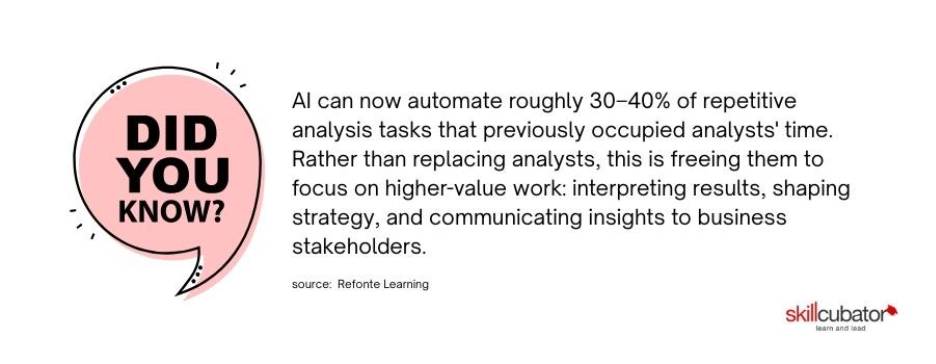
The most effective analysts in 2026 are not the ones trying to compete with AI tools. They are the ones who have learned to work with them. Routine data cleaning, basic dashboard generation, and templated reporting are increasingly handled by automated systems.
What cannot be automated is judgment. The ability to question a suspicious output, reframe from a business problem, or explain a dataset to a non-technical leader these are now the analyst’s primary value.
Hiring managers are actively looking for candidates who demonstrate this kind of AI-aware thinking, not candidates who list AI as a bullet point on their resume.
2. Domain Knowledge Is the New Differentiator
In 2026, generic analytical skills are table stakes. What separates candidates is their ability to contextualize data within a specific industry.
Analysts with strong domain knowledge are estimated to be up to 3 times more valuable than tool-only specialists in today’s hiring market. Fintech firms want analysts who understand fraud detection and payment flows. Healthcare organizations need professionals who can interpret patient outcome data. Supply chain leaders are looking for people who can navigate real-time logistics data, not just build a chart.
If you are currently upskilling, picking a domain is no longer optional. It is the move.
3. Self-Service BI Is Changing the Analyst’s Role Inside Organizations
Tools like Power BI, Tableau, and Looker have made it possible for non-technical teams to generate their own reports. This does not make analysts redundant. It redefines what they are for.
As more business users gain basic data access, analysts are increasingly valued as the people who set up governed data models, design trusted dashboards, train colleagues on interpretation, and ensure that insights are not just generated but acted on correctly.
Also Read
Where Hiring Opportunities Are Expanding
The demand for DA and BA professionals is not uniform. Certain sectors are seeing significantly stronger growth and understanding where to position yourself matters.
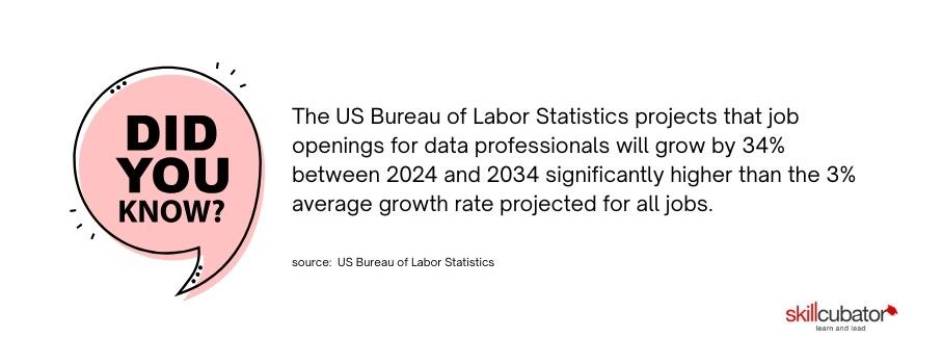
Financial services and fintech remain among the most active hiring verticals for both roles. In 2025 alone, finance job postings grew by over 38,000 in financial services, with business analysts and financial analysts accounting for more than half of all finance roles posted.
Healthcare is the fastest growing vertical. The shift toward data-driven patient outcomes, operational efficiency, and AI-enabled clinical tooling has created demand that consistently outpace the available talent pool.
Retail, supply chain, and e-commerce continue to expand their analytics functions as organizations invest in real-time demand forecasting and inventory optimization.
Across all these sectors, the common thread is this: organizations are not just hiring analytical skills. They are hiring business fluency. Analysts who can walk into a domain and start contributing meaningfully without a six-month onboarding ramp are the ones being prioritized.
How the Roles Have Shifted: Then vs Now
Here is a straightforward comparison of what these roles looked like before, what they look like today, and what hiring managers are actually evaluating.
| Role Scope | Requirements gatherer, process mapper | Insight communicator, strategic partner | Can you translate data into decisions? |
|---|---|---|---|
| Core Tools | Wod, Excel, PowerPoint, Visio, Balsamiq, SQL, Jira, Confluence | SQL, Power BI, Tableau, Python basics | Do you work on the actual tools we use? |
| AI Readiness | Not expected | Expected – prompt use, output validation | Can you work alongside AI, not just despite it? |
| Domain Fluency | General business context | Fintech, healthcare, or supply chain depth | Do you understand our industry’s problems? |
| Communication | Documented requirements | Stakeholder-ready narratives and dashboards | Can you present findings without a translator? |
Before you decide what to learn next, it helps you to know where you already stand. Skillcubator’s Self-Assessment Test gives you a clear picture in minutes.
Where to Focus Your Skill-Building Right Now
If you are currently in a training program or planning your next upskilling move, here is where to direct your energy.
- Build SQL and at least one BI tool to a level where you can work in them, not just describe them. Power BI and Tableau remain the most employer-referenced tools in 2026 job postings.
- Develop a working understanding of how AI tools fit into the analyst’s workflow. You do not need to build models. You need to know how to use, question, and validate AI-generated outputs.
- Pick a domain and go deep. Finance, healthcare, and supply chain are the highest-demand verticals. Even a focused side project in your chosen domain signals the right intent to a hiring manager.
- Practice translating data into narrative. The ability to explain what a dataset means for a business decision clearly, concisely, and without jargon is the skill that closes the interview.
- Build a portfolio with two or three work samples. A requirements document, a dashboard mock-up, or a data story built on a public dataset demonstrates applied capability in a way a certificate alone cannot.
How Placement-Aligned Training Fits into This
The skills gap described above is real, but it is not inevitable. What changes outcomes is the quality of how you prepare.
Self-paced learning can build a foundation. But the professionals who move fastest into Data Analyst and Business Analyst roles in 2026 are those who trained in environments that reflect actual professional conditions with structured feedback, live problem-solving, and instruction from people who are working in the field right now.
Skillcubator’s programs are designed with this in mind. The focus is not certification for its own sake. It is building the kind of applied fluency that hiring managers recognize within the first fifteen minutes of a conversation.
If you are considering a transition into a Data Analyst or Business Analyst role or looking to move into a higher-value position within IT, the path is clearer than it might feel right now. The right business domain training does not just teach you the tools. It shows you how to use them in context and how to talk about that to the people who will hire you.
Final Thoughts
The Data Analyst and Business Analyst roles of 2026 are not just technically demanding. They are strategically demanding.
Organizations are not looking for professionals who can pull a report. They are looking for professionals who can walk into a complex situation, make sense of the data, and tell the business what to do next.
That is the bar. And it is reachable. But it requires intentional preparation, not just accumulated certificates.
If you are ready to build that bar, reach out to the Skillcubator team to find the program that fits where you are and where you want to go.
You cannot copy content of this page