





 Leave a Comment on From Learning to Employability: What IT Hiring Managers Actually Notice
From Learning to Employability: What IT Hiring Managers Actually Notice
You have finished your IT certification. You updated your LinkedIn. You applied to roles that seemed like a solid fit. And then: silence.
If this feels familiar, you’re not alone. Thousands of professionals complete IT courses every year and still struggle to break through to interviews or offers. The disconnect is rarely about effort. It’s about understanding what actually gets noticed on the other side of the hiring table.
This guide breaks down exactly what IT hiring managers evaluate, and why Skillcubator’s placement-aligned training approach is designed to close that gap.
TL;DR — What This Blog Covers
- Why certifications alone don’t get you hired
- What hiring managers actually evaluate in IT candidates
- The role of practical tools, real-world problem-solving, and soft skills
- How placement-aligned training bridges the gap
- What to build before your first interview
The Certification Gap Nobody Talks About
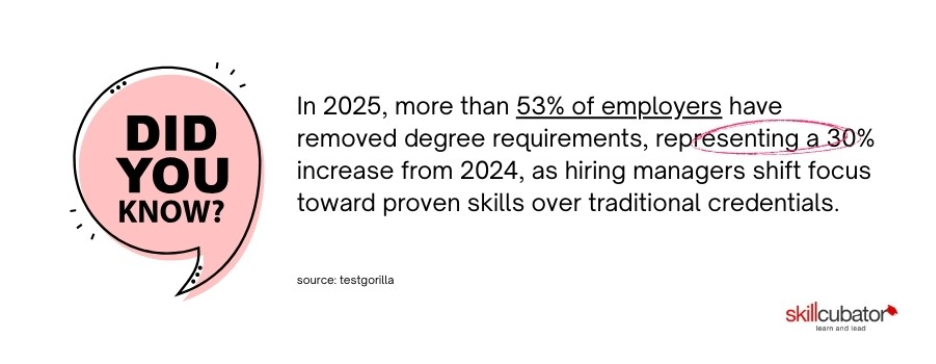
Certifications are a signal. They confirm that you’ve studied a subject and passed an assessment. But for most hiring managers, they mark the starting line, not the finish line.
A certified AWS Solutions Architect candidate and a candidate who has deployed cloud infrastructure to solve a real business problem are not the same in a hiring manager’s eyes. The difference is evidence of applied capability.
Most learning platforms teach you what. Hiring managers want proof of what you did with it.
What Hiring Managers Actually Notice
When a resume lands on a hiring manager’s desk, their mental checklist is rarely about exam scores. Here is what they’re genuinely looking for:
1. Hands-On Tool Familiarity
Can you navigate the environments, platforms, and tools used on the job from day one? Hiring managers in cloud, data, and BA roles consistently report that candidates who can reference real tool experience move faster in interviews.
For cloud roles, that means comfort with AWS consoles, IAM configurations, and cost management dashboards, not just knowing what EC2 stands for. For business analysis roles, it means Jira, Confluence, process mapping tools, and requirement documentation in real project contexts.
2. Problem-Solving Over Theory
Interviewers use scenario-based questions to separate learners from doers. Questions like “Walk me through a time you had to troubleshoot a failing process” or “How would you handle conflicting stakeholder requirements?” are designed to test whether your knowledge is active or passive.
Candidates who can frame answers with structure, for example, using a situation-action-outcome approach, stand out immediately. This is a skill that has to be practiced, not just understood.
3. Communication and Stakeholder Fluency
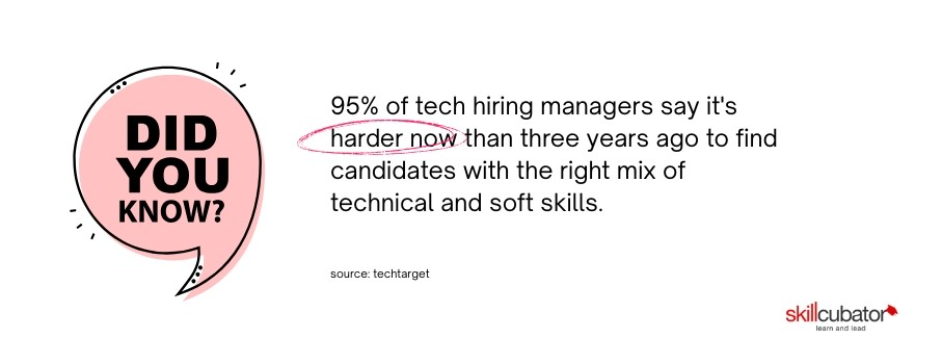
IT is no longer purely technical. Whether you’re in project management, business analysis, cloud architecture, or data, your ability to communicate findings, manage expectations, and translate technical language for non-technical audiences is evaluated early.
Hiring managers often screen for this in the first round. A candidate who explains clearly, listens well, and asks sharp, clarifying questions signals readiness for a professional environment.
Also Read
4. Evidence of Real-World Application
This is the category most self-paced learners miss. Hiring managers want to see portfolios, case studies, capstone projects, or documented work samples that show how you applied your training to realistic scenarios.
This doesn’t require prior IT employment. It requires structured learning environments that include practical outputs, something Skillcubator intentionally builds into its programs.
5. Attitude and Learning Trajectory
In fast-moving IT fields, hiring managers are also assessing your potential trajectory. Are you curious? Do you ask good questions? Are you aware of what you don’t yet know?
Candidates who demonstrate intellectual humility and a structured approach to skill-building are viewed as lower hiring risk, especially for teams that invest in long-term development.
The Gap Between Self-Paced Learning and Hiring Readiness
Self-paced learning has real value for building foundational knowledge. But it rarely replicates the conditions of a professional environment.
Without structured feedback, you don’t know if your documentation looks like what a real BA team expects. Without live scenario exercises, your interview responses tend to stay theoretical. Without instructor guidance, you may focus on areas that feel comfortable rather than the ones most relevant to your target role.
The result is a candidate who has studied extensively but lacks the professional fluency that hiring managers notice in the first thirty minutes of an interview.
What Hiring Managers See: Self-Paced vs Placement-Aligned Training
| Evaluation Area | Self-Paced Learner | Placement-Aligned Learner | Hiring Manager Signal |
|---|---|---|---|
| Tool Familiarity | Watched demos, took quizzes | Practiced in simulated environments | Confidence in live environments |
| Problem-Solving | Knows frameworks theoretically | Applied frameworks in case scenarios | Handles ambiguity well |
| Communication | Minimal structured practice | Feedback-driven, coached articulation | Professional readiness |
| Portfolio Evidence | Certificate only | Projects, case studies, work samples | Tangible proof of capability |
| Interview Readiness | Self-prepared, inconsistent | Mock interviews, structured coaching | Polished, hirable impression |
How Skillcubator Approaches Placement-Aligned Training
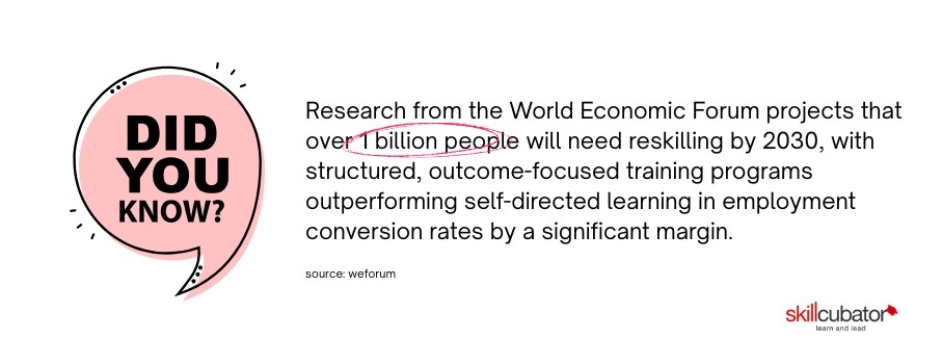
Skillcubator’s programs are built around one core principle: training should produce employable professionals, not just certified ones.
Every course is designed with the hiring outcome in mind. Instructors bring active industry experience, which means curriculum choices reflect what teams actually need right now. Live sessions allow for real-time questions, scenario practice, and the kind of professional dialogue that builds fluency.
Beyond content, Skillcubator integrates resume alignment, interview preparation, and career coaching into the learning journey. This is what bridges the gap between a certificate and a job offer.
For professionals making a career transition to IT, the goal isn’t just to learn. It’s to arrive at the interview table with evidence, confidence, and clarity.
What to Build Before Your First IT Interview
If you’re currently in a training program or planning to start one, here is what to actively build toward:
- A portfolio with at least two to three work samples relevant to your target role, such as a requirements document, a cloud architecture diagram, or a data dashboard.
- Fluency in two to three tools is most common in your field, practiced beyond tutorials and into actual use cases.
- A clear professional narrative that connects your background to your target role, one you can articulate in sixty seconds.
- Answers to the top five scenario-based questions in your field, practised aloud and refined through feedback.
- A LinkedIn profile that reflects your learning trajectory, not just your past job titles.
Final Thoughts
Hiring managers are not looking for perfect candidates. They are looking for candidates who can operate, contribute, and grow in a real professional environment.
The shift from learning to employability is not automatic. It requires intentional preparation, structured practice, and training that is designed with the hire in mind.
If you’re ready to move beyond certification and into genuine career readiness, Skillcubator’s placement-aligned programs are built exactly for that transition. Reach out to the Skillcubator team to find the right path for your background and goals.
You cannot copy content of this page